



SUSTAINABLE HYGIENE – WHAT DOES THAT MEAN?
At DR.SCHNELL, we work specifically to provide you, our customer, with all the cleaning and disinfecting agents you need for your hygiene measures with the lowest possible emissions. We achieve this through two fundamental approaches: one company-related and the other product-related. In addition to the many measures we describe below, we offset any remaining company-related emissions each year with selected, independently verified climate protection projects. We also enable our customers to offset any remaining product-related emissions by paying a CO₂ surcharge.
 COMPANY-RELATED
In addition to a wide range of reduction measures, DR.SCHNELL GmbH & Co. KGaA offsets its company-related emissions annually through climate protection certificates. To this end, we work with the sustainability consultancy FokusZukunft, which provides a seal as proof of the annual offset. Further details on the assessment basis, calculation standard, excluded emissions, emission reduction measures, type of compensation, and specific compensation projects can be found further down this page.
PRODUCT-RELATED
In terms of products, DR.SCHNELL offers you, the customer, the opportunity to make your own contribution to climate protection by voluntarily paying a CO2 surcharge when purchasing DR.SCHNELL products via the DR.SCHNELL CO2 calculator the opportunity to contribute to climate protection yourself by voluntarily paying a CO2* surcharge when purchasing DR.SCHNELL products. The raw materials we purchase are accounted for according to the "cradle-to-grave" principle. To this end, we have built up a large and constantly growing database of all our raw materials and packaging materials. With this database, we can now calculate the carbon footprint of each of our products at the click of a mouse. The main databases used to calculate the product footprint are the EcoInvent database Ver. 3.8 (2021) and the GHG Protocol.
We had our approach verified as scientifically correct by the experts at GUTCert and received a certificate of conformity with ISO 14067 (Carbon Footprint of Products- Requirements and guidelines for quantification) .
DR.SCHNELL'S OFFER NOW GIVES EVERYONE THE OPPORTUNITY TO OFFSET THE REMAINING PRODUCT-RELATED GREENHOUSE GAS EMISSIONS OF THE CLEANING AND DISINFECTION AGENTS WE PURCHASE.
The total package of avoided/reduced emissions through the continuous implementation of savings measures, the offsetting of remaining company-related emissions in climate protection projects, and the opportunity created for our customers to offset remaining product-related emissions by paying a CO₂ surcharge in accordance with ISO 14067 certification, is included in our offer statement: DR.SCHNELL sustainable hygiene. ISO14067 certified accounting, comprises our offer statement: DR.SCHNELL sustainable hygiene.


Basics for calculating company-related emissions for annual compensation measures
Our compensation measures to offset our company-specific emissions are carried out in cooperation with the sustainability consultancy Fokus Zukunft GmbH& Co. KG. This is a purely company-related assessment and not a product-related one. Product-related emissions were not taken into account. Details on the basis for assessment and the compensation measures in more detail further down this page.
CALCULATION STANDARD / CALCULATION METHOD
Fokus Zukunft GmbH used the guidelines of the Greenhouse Gas Protocol Corporate Standard (GHG Protocol). This internationally recognized standard for calculating companies' CO₂ footprints divides emissions into three categories, known as Scope 1, Scope 2, and Scope 3. However, only some of Scope 3 emissions were taken into account in DR.SCHNELL's CO₂ balance sheet of DR.SCHNELL Scope 3 emissions were only partially taken into account; the excluded emissions are listed in detail below:
Scope 1: Includes all direct emissions resulting from an organization's activities. These include heat, cooling, and steam generation, fuel consumption by company vehicles, and leaks from air conditioning systems.
Scope 2: Includes indirect emissions such as electricity, heat, or steam purchased from suppliers.
Scope 3: Includes other indirect emissions from the supply chain. These are a consequence of the company's activities but originate from independent external sources. In the GHG Protocol, Scope 3 emissions are considered optional for the creation of a company carbon footprint. Nevertheless, we have taken at least some of these emissions into account as part of our certification.
The graphic below clearly illustrates the contents of the scopes in accordance with the GHG Protocol.


The following specific assessment criteria were used to prepare DR.SCHNELL's company-specific greenhouse gas balance sheet:
The business activities of 2021 were used as the basis for calculating the CO₂ footprint of the operational activities of DR.SCHNELL GmbH & Co. KGaA (Company Carbon Footprint, CCF). All data used in the calculation was collected by DR.SCHNELL in accordance with best practice and to the best of its knowledge and belief, and made available to Fokus Zukunft GmbH for the purpose of determining the CO₂ balance.
The internal processes at DR.SCHNELL stipulate that the forecast emissions for the previous year are recalculated in Q1 of the following year so that the forecast values can be continuously compared with the actual values. Any differences from the calculation basis described are then compensated for accordingly.
ORGANIZATIONAL BOUNDARY
The organizational boundary specifies which locations and subsidiaries, etc., of the organization, i.e., our company, were taken into account.
Locations: Munich, Feldkirchen, and Hamburg (all locations of DR.SCHNELL)
Employees in the reference year: 327
OPERATIONAL LIMIT
The operational boundary describes in detail which emission categories were taken into account and, in order to ensure a comprehensive assessment, which emission categories were not considered in the context of the company's compensation measures and were therefore excluded.
THE FOLLOWING WERE TAKEN INTO ACCOUNT:
Scope Bereich | Emissions- kategorie | Qualität der eingetragen Daten |
1 | Wärmeverbrauch | Realwerte |
1 | Kraftstoffverbrauch im Unternehmen | Realwerte |
1 | Gasleckagen (Kältemittel) | Realwerte |
2 | Stromverbrauch | Realwerte |
2 | Fernwärme / Fernkälte | Realwerte |
3 | Vorgelagerte energiebezogene Emissionen | Berechnung auf Basis der Verbrauchsdaten |
3 | Geschäftsreisen und Hotelübernachtungen | Realwerte & Schätzwerte |
3 | Wasser / Abwasser | Realwerte |
3 | Abfallaufkommen im Unternehmen | Realwerte |
3 | Papierverbrauch | Realwerte & Schätzwerte |
3 | Hardware | Realwerte & Schätzwerte |
3 | Verbrauchsmaterialien Produktion | Realwerte |
3 | Austauschlogistik durch Dritte | Realwerte & Schätzwerte |
NOT TAKEN INTO ACCOUNT:
The following upstream Scope 3 greenhouse gas emissions were not taken into account in the company's corporate compensation measures:
Scope Bereich | Emissions-Kategorie |
3 | Eingekaufte Güter und Dienstleistungen (Herstellung/Gewinnung, Verarbeitung und Transport |
3 | Eingekaufte Kapitalgüter (Gebäude, Fahrzeuge und Anlagen) |
3 | Transport und Verteilung der eingekauften Waren |
The following downstream greenhouse gas emissions from Scope 3 were also not taken into account:
Scope Bereich | Emissionskategorie |
3 | Verarbeitung der verkauften Produkte |
3 | Nutzung der verkauften Produkte durch Endkonsumierende |
3 | Umgang mit verkauften Produkten am Lebenszyklusende |
As the table above shows, despite the aforementioned optionality of Scope 3 emissions according to the GHG Protocol, we nevertheless took at least some Scope 3 emissions into account when selecting the operational boundaries. All estimates are based on internal data such as travel expense reports, operating cost reports, and toner and cartridge consumption. This thus exceeds the minimum requirements of the GHG Protocol (Chapter 4) for defining a company's operational boundaries when determining a company-related CO₂ balance.
As already mentioned, product-related emissions are excluded from this purely company-related assessment. The raw material procurement for our products is determined in a separate cradle-to-grave assessment in accordance with ISO 14067, the compensation for which is not part of the company-related compensation measures.In this regard, however, our customers have the option mentioned at the beginning of determining the emissions of the products they purchase using the DR.SCHNELL CO2 calculator and, upon payment of a CO2 surcharge, purchase certificates directly from DR.SCHNELL to offset these product-related emissions.
As a precautionary measure, when calculating the company-related CO₂ balance for the company-related compensation measures, an additional 5% surcharge was added to the CO₂ total result was finally increased by an additional 5% to take into account any uncertainties in data collection and the calculation of the greenhouse gas balance.
Disclosure of emissions data for 2023 according to C2C Certified® Version 4.1, CACP (Clean Air & Climate Protection):
In 2023, the production of 1,797.7 tons of ECO Collection products resulted in 43.8 tCO₂e Scope 1 emissions and 21.8 tCO₂e site-related Scope 2 emissions. Due to our strong commitment to sustainability, market-based Scope 2 emissions were zero, as electricity from 100% renewable sources was used. The product-related Scope 3 emissions of the entire ECO Collection were determined by our ISO 14067-validated CO₂ calculator and amounted to 1332.4 tCO₂e.
We achieved the Cradle to Cradle Gold Level targets by generating more than 25% of the electricity used to manufacture the products with our on-site PV system and sourcing the remaining electricity from 100% renewable sources. In addition, 50% of Scope 1 emissions and 25% of product-related Scope 3 emissions were offset by verified CO₂ certificates.
Emissions reduction as part of a company's environmental measures is not a short-term project, but the result of continuous and long-term efforts in all areas of the company. These measures are therefore not taken within the framework of and to achieve certifications, but are regularly adapted as part of the company's ongoing efforts.We have held EMAS certification since 1998, and our environmental and climate protection goals are presented and updated in the environmental statement. Our climate protection efforts are divided into company-related and product-related measures.
COMPANY-RELATED MEASURES
Use of photovoltaics to power the Munich production site. Part of the electricity generated on site is fed into the public grid. More than half of the electricity required for our production is thus generated in-house.
Company mobility management – Since October 2020, employee tickets for public transportation have been subsidized by 50%.
Company mobility management – Since October 2020, employee parking spaces are no longer free of charge but are rented out in order to further increase the attractiveness of public transportation. (The funds generated are, of course, reinvested in the form of employee events).
Company mobility management – 13 gasoline-powered vehicles have been replaced by electric vehicles. Savings of approx. 23,400 liters of fuel.
Reduction of paper consumption through digitization and optimization of operational processes (e.g., ordering and logistics processes).
Business trips by train whenever possible. This is stipulated in the DR.SCHNELL travel expense policy. Optimisation of production water supply through our own facilities (expansion of osmosis plants in 2020 now provides the raw material "demineralised water" entirely on site).
Reduction of emissions through the use of a water treatment plant at the Munich production site, as this reduces the burden on the city's sewage system in terms of chemical and energy consumption. The amount of phosphate discharged is reduced, and precipitating agents in sewage treatment plants can be saved. By reducing the organic substances in the discharged wastewater, less climate-damaging sludge gas (including methane and carbon dioxide) is generated.
 PRODUCT-RELATED MEASURES
Introduction of 100% recycled bottles for all products in the ECO Collection in 2019. Each 1-liter recycled container saves CO₂* compared to a standard DR.SCHNELL PE container (white).
Introduction of 10-liter containers made from 100% recycled material for all products in the ECO Collection (except hazardous goods) in 2022. Each 10-liter recycled container saves CO₂* compared to a standard DR.SCHNELL 10-liter container. Introduction of the ECOLUTION product system since the end of 2019: We assume that one ECOLUTION FOROL STICK replaces one bottle of FOROLFEE. We also assume that one ECOLUTION MILIZID STICK replaces one bottle of MILIFEE. This results in savings in emissions and packaging materials. The remaining emissions are offset by the Gold Standard-certified climate protection project "HYDROPOWER IN CHILE" described below.
We also assume that one bottle of ECOLUTION MILIZID replaces up to 5 bottles of MILIZID, and one bottle of ECOLUTION FOROL replaces up to 5 bottles of FOROL. This results in further savings in emissions. The remaining emissions are offset by the Gold Standard-certified climate protection project "ELECTRICITY FROM HYDROPOWER IN CHILE" described below.
Continuous work on optimizing formulations in terms of their CO₂* balance in accordance with ISO 14067.
Elimination of colored PE containers – replacement with bottles and canisters containing 30% post-consumer recycled PE. This results in reductions in CO₂* and plastics.
100% switch to bioethanol
Substitution of raw material suppliers with suppliers with shorter delivery routes from Austria and Germany (e.g., citric acid, amidosulfonic acid, bioethanol) This results in significant emissions savings due to shorter transport routes (for all) and energy-efficient manufacturing methods (for citric acid).
Optimization of route planning for field staff in terms of efficiency and resource conservation through a new regional sales structure
Conversion of several 1 L container lid variants to 100% recycled plastic
Substitution of raw materials with a growing proportion of renewable or regenerative raw materials with a lower CO2* footprint, e.g., use of sophorolipids in FOROLFEE
The emissions determined as part of the company's compensation measures are offset in Gold Standard and Verified Carbon Standard certified climate protection projects. Gold Standard and Verified Carbon Standard are two quality standards for voluntary compensation and cover the majority of the market. Both quality standards are listed in the brochure published by the German Federal Environment Agency among the most important international quality standards (see page 23).nbsp;
 The Gold Standard was developed by the WWF and other environmental organizations. Gold Standard projects also highlight social and environmental aspects that contribute to the achievement of sustainability goals.
 Verified Carbon Standard (VCS) is the world's most widely used voluntary standard for offsetting greenhouse gas emissions. In 2015, VCS accounted for over half of all transactions in the global voluntary market and is therefore highly relevant to the market, particularly in the area of avoided deforestation. An additional standard was created with the addition of CCB (Climate, Community, and Biodiversity Standards). It examines the overall benefits of a project beyond pure emission reductions, with a particular focus on biodiversity conservation and social impacts in the project region. The standard, which was developed jointly by research institutes, companies, and environmental groups, is primarily used in forestry and agricultural projects.
Basically, it should be noted that when selecting our climate protection projects, we not only considered aspects and measures relating to climate protection, but also took into account the principles of holistic sustainability in all three dimensions (ecological, economic, and social). We have focused on the UN SDGs' sustainable development goals.In addition, we see gender equality and the contribution to high-quality education as an indispensable contribution to holistic sustainability, which is reflected in the selected climate protection projects and our social commitment in Germany.
Our compensation projects are described in detail and linked below:
 CLEAN DRINKING WATER IN SIERRA LEONE (GOLD STANDARD VER)
The project supports the provision of clean water using borehole technology for hundreds of households in the Republic of Sierra Leone.Sierra Leone faces major challenges in providing safe water, especially in rural areas, where over 50% of the population has no access to a safe water source. Even where improved sources such as boreholes are available, an estimated 95% of sources are contaminated with diseases related to poor sanitation, such as E. coli. As in other parts of sub-Saharan Africa, the lack of access to safe water or other means of water treatment means that rural households are forced to boil water to purify it, causing significant damage to ecosystems and releasing carbon dioxide into the atmosphere.releasing carbon dioxide into the atmosphere. The project operator, CO 2 balance, works closely with CODE SL, a local organization in Sierra Leone, to rehabilitate and maintain boreholes and to ensure that good sanitation practices are followed in the communities. By providing clean water, the project ensures that households use less firewood for water treatment, which leads to a reduction in carbon dioxide emissions from the combustion process.
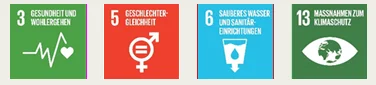
 HYDROPOWER IN CHILE (VCS)
By offsetting the CO₂* emissions of the products you purchase using the DR.SCHNELL CO₂* calculator(balanced according to ISO 14067) and paying the CO₂* surcharge, you are also supporting the following project: Chacayes Hydroelectric Project, Chile.
This is a run-of-river power plant in the Cachapoal Valley in Region VI in Chile. The power plant has an installed capacity of 110.8 MW and an expected annual net generation of approximately 560 GWh of electricity per year. It uses water from the Cipreses and Cachapoal rivers to generate hydroelectric power for export to the SIC grid. The Chilean government is actively seeking alternative forms of energy to stabilize the energy supply and meet the rapidly growing demand of 350,400 MW per year. However, it is predicted that the system expansion will mainly be achieved through thermal energy. This project creates additional capacity for renewable energies and replaces the energy from the grid that is partly generated by fossil fuel-fired power plants. This will reduce CO₂ emissions by approximately 357,000 tons per year.
In addition, this project supports the local and regional population in finding direct employment, offers further training measures, and contributes to improving the regional infrastructure—for example, road or bridge improvements.

Laufwasserkraftwerk sorgt für Strom im Bundesstaat Uttaranchal in Indien (VCS)
Das Vishnuprayag Hydroelectric Project (VHEP) ist ein 4 x 100 MW Laufwasserkraftwerksprojekt am Fluss Alaknanda in der Nähe von Joshimath im Distrikt Chamoli im indischen Bundesstaat Uttaranchal. Das Projekt wird von Jaiprakash Power Ventures Ltd. (JPVL), einer Tochtergesellschaft von Jaiprakash Associates Limited (JAL), realisiert. Die Projektaktivität erzeugt Strom aus erneuerbarer Energie aus Wasserkraft und verkauft diesen an das regionale Stromnetz UPPCL. Das Projekt wurde planmäßig in Betrieb genommen. Es läuft bis heute erfolgreich und die erwartete Betriebsdauer für das Projekt beträgt 30 Jahre. Da die Projektaktivität die Erzeugung von Strom aus erneuerbaren Energiequellen beinhaltet, werden die anthropogenen Treibhausgas-emissionen (THG) reduziert, die bei der Einspeisung von Strom in das Netz mit fossilen Brennstoffen entstanden wären. Die durchschnittlichen jährlichen Emissions-reduktionen des Projekts für den Anrechnungs-zeitraum werden auf 1.468.106 tCO2e geschätzt. Dies entspricht einer erwarteten Gesamtsumme von 44.043.180 tCO2e für die gesamte Dauer des Anrechnungszeitraums.
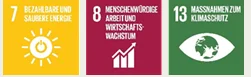
Das Projekt trägt zu den UN-Zielen für nachhaltige Entwicklung (Sustainable Development Goals) Nummer 7 (Bezahlbare und saubere Energie), 8 (Menschenwürdige Arbeit und Wirtschaftswachstum) und 13 (Maßnahmen zum Klimaschutz) bei.
* CO₂ values determined using an ISO 14067-certified calculation method